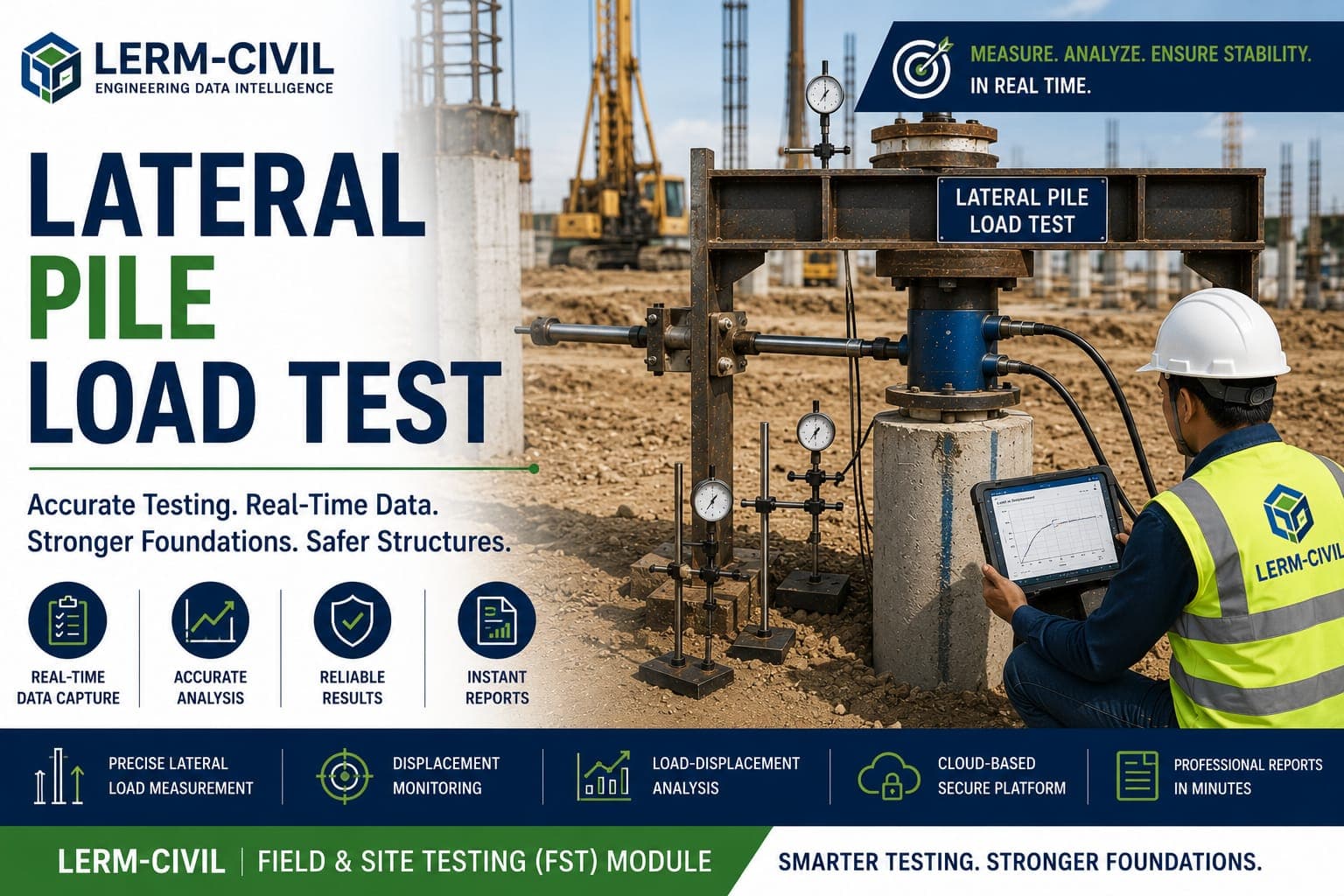
Lateral Pile Load Test
Lateral Pile Load Testing is a critical field test used to evaluate a pile's ability to withstand horizontal forces such as wind, seismic loads, earth pressure, and marine impacts. The LERM-CIVIL FST Module digitizes the entire testing workflow, from field data capture to final report generation, eliminating manual calculations, spreadsheet processing, and separate graph plotting. As load and displacement readings are entered, the system automatically calculates deflections, generates load-deflection curves, tracks pile behavior, and produces professional engineering reports in real time. This improves accuracy, reduces reporting time, and provides engineers with faster insights for foundation design, performance assessment, and decision-making.
𝗟𝗮𝘁𝗲𝗿𝗮𝗹 𝗣𝗶𝗹𝗲 𝗟𝗼𝗮𝗱 𝗧𝗲𝘀𝘁𝗶𝗻𝗴
𝗟𝗮𝘁𝗲𝗿𝗮𝗹 𝗣𝗶𝗹𝗲 𝗟𝗼𝗮𝗱 𝗧𝗲𝘀𝘁𝗶𝗻𝗴: 𝗙𝗿𝗼𝗺 𝗙𝗶𝗲𝗹𝗱 𝗢𝗯𝘀𝗲𝗿𝘃𝗮𝘁𝗶𝗼𝗻𝘀 𝘁𝗼 𝗜𝗻𝘀𝘁𝗮𝗻𝘁 𝗘𝗻𝗴𝗶𝗻𝗲𝗲𝗿𝗶𝗻𝗴 𝗜𝗻𝘀𝗶𝗴𝗵𝘁𝘀
For foundation engineers and geotechnical professionals, a Lateral Pile Load Test is one of the most critical methods for evaluating a pile's ability to resist horizontal forces acting on a structure.
Whether it's wind loads on high-rise buildings, seismic forces on bridges, berthing forces on marine structures, or earth pressures on retaining systems, understanding how a pile behaves under lateral loading is essential for safe and economical foundation design.
Yet, despite its importance, the workflow surrounding lateral pile testing often remains highly manual.
Field engineers record dial gauge readings at every load increment. Data is transferred into spreadsheets. Deflection calculations are performed manually. Load-deflection curves are plotted separately. Engineers then interpret pile behavior and compile reports from multiple sources before presenting the results to clients and consultants.
The field test may be completed within hours.
The reporting and analysis often take considerably longer.
𝗧𝗵𝗮𝘁’𝘀 𝘄𝗵𝗲𝗿𝗲 𝗟𝗘𝗥𝗠-𝗖𝗜𝗩𝗜𝗟 𝗙𝗦𝗧 𝘁𝗿𝗮𝗻𝘀𝗳𝗼𝗿𝗺𝘀 𝘁𝗵𝗲 𝗽𝗿𝗼𝗰𝗲𝘀𝘀.
Our Field & Site Testing Module (FST) digitizes the complete Lateral Pile Load Testing workflow—from field measurements to final interpretation and reporting.
As lateral load and displacement readings are entered into the system, LERM-CIVIL automatically processes observations, calculates lateral deflections, generates load-deflection curves, tracks loading and unloading behavior, and prepares professional engineering reports in real time.
No manual graph plotting.
No repetitive calculations.
No disconnected spreadsheets.
Just accurate data flowing seamlessly from the test location to the final engineering report.
𝗛𝗼𝘄 𝗟𝗘𝗥𝗠-𝗖𝗜𝗩𝗜𝗟 𝗙𝗦𝗧 𝗦𝘂𝗽𝗽𝗼𝗿𝘁𝘀 𝗟𝗮𝘁𝗲𝗿𝗮𝗹 𝗣𝗶𝗹𝗲 𝗟𝗼𝗮𝗱 𝗧𝗲𝘀𝘁𝗶𝗻𝗴
During testing, engineers capture:
Applied lateral load at each stage
Horizontal pile displacement readings
Loading and unloading observations
Dial gauge measurements from multiple locations
Time-based observations where required
Test-specific project and pile details
· Once entered, the system automatically:
· Calculates average lateral displacement values
· Organizes loading and unloading data
· Generates load-deflection graphs instantly
· Tracks pile response throughout the testing cycle
· Produces standardized engineering reports
· Maintains complete traceability of observations and calculations
𝗧𝗵𝗲 𝗥𝗲𝘀𝘂𝗹𝘁?
Real-time visualization of pile behavior under lateral loading
Fater verification of lateral displacement limits
Automated generation of load-deflection curves
Improved accuracy through digital data capture
Standardized reporting across projects and teams
Reduced turnaround time for engineering reports
Better decision-making for foundation and structural design
Enhanced confidence in pile performance assessment
𝗪𝗵𝘆 𝗟𝗮𝘁𝗲𝗿𝗮𝗹 𝗣𝗶𝗹𝗲 𝗟𝗼𝗮𝗱 𝗧𝗲𝘀𝘁𝗶𝗻𝗴 𝗠𝗮𝘁𝘁𝗲𝗿𝘀
Lateral load testing provides valuable insight into the interaction between the pile and surrounding soil under horizontal loading conditions. It helps engineers:
Validate design assumptions
Assess lateral load capacity
Determine pile stiffness characteristics
Verify allowable deflection limits
Evaluate foundation performance for critical structures
Improve confidence in foundation safety and serviceability
Whether you're testing bridge foundations, transmission towers, marine structures, industrial facilities, retaining systems, or high-rise developments, LERM-CIVIL FST provides a structured and efficient approach to managing the entire testing process.
𝗢𝗻𝗲 𝗣𝗹𝗮𝘁𝗳𝗼𝗿𝗺. 𝗢𝗻𝗲 𝗪𝗼𝗿𝗸𝗳𝗹𝗼𝘄.
From field observations to final engineering reports.
Ready to transform your pile testing operations?
🚀 Take a free tour of the platform!
🌐 Visit: www.lerm.in
👉 Book Your Personalized Demo https://lnkd.in/diT6ApbY
𝗪𝗵𝘆 𝗙𝗼𝘂𝗻𝗱𝗮𝘁𝗶𝗼𝗻 𝗧𝗲𝘀𝘁𝗶𝗻𝗴 𝗧𝗲𝗮𝗺𝘀 𝗧𝗿𝘂𝘀𝘁 𝗟𝗘𝗥𝗠-𝗖𝗜𝗩𝗜𝗟 𝗙𝗦𝗧
✅ Instant generation of load-deflection curves
✅ Centralized storage of all test observations and calculations
✅ Faster report preparation with complete traceability
✅ Consistent and professional documentation for every project
✅ Enhanced confidence in lateral pile performance assessment
✅ Improved collaboration between field and design teams
#LateralPileLoadTest #PileTesting #FoundationEngineering #GeotechnicalEngineering #LateralLoadTest #PileDeflection #CivilEngineering #ConstructionTechnology #Infrastructure #FoundationDesign #Geotech #EngineeringSoftware #Automation #LERMCIVIL #FieldTesting #DigitalTransformation #Construction #SaaS #LIMS #LoadDeflection #StructuralEngineering #BridgeEngineering


Related Posts
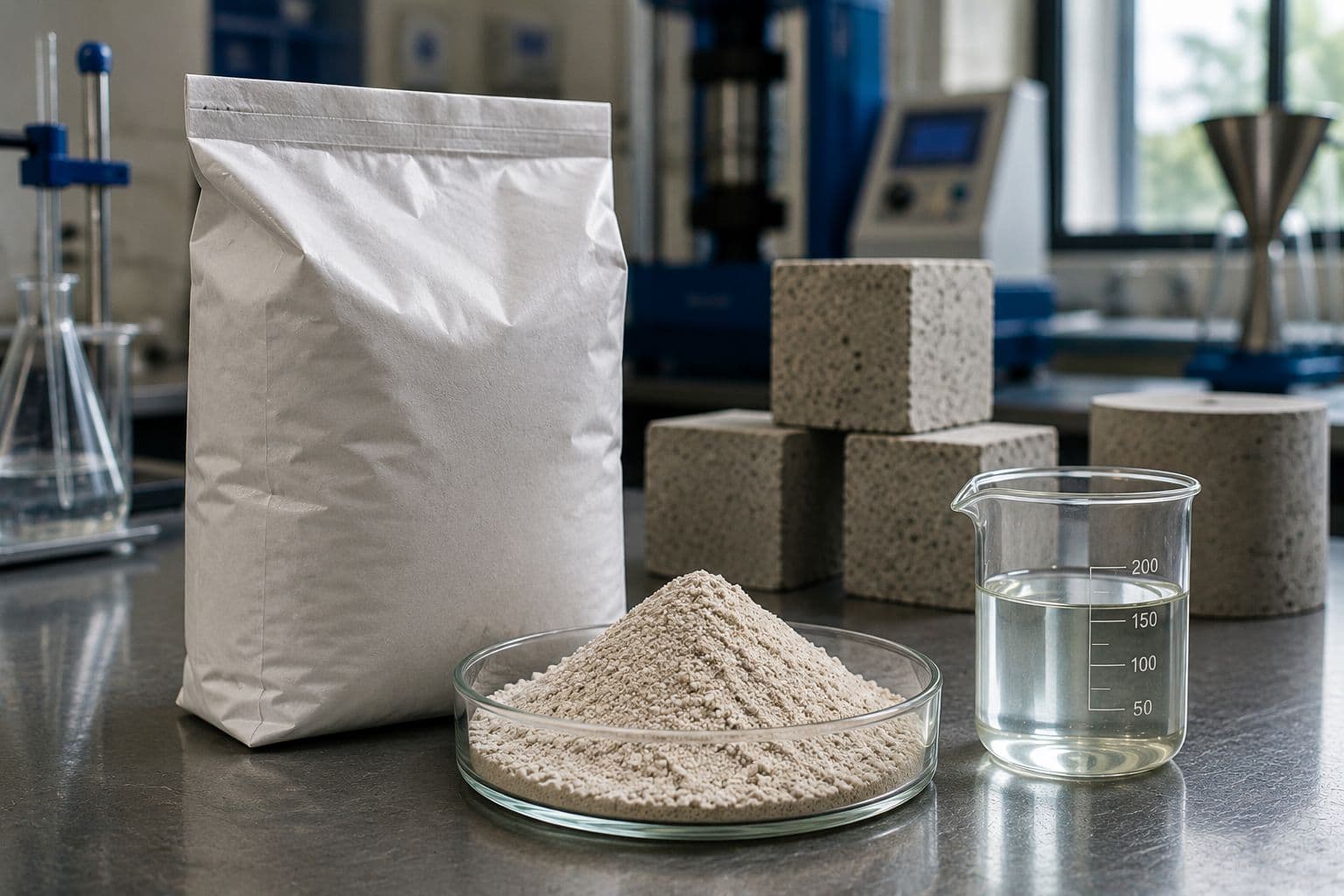
Cebex 100
Cebex 100 is widely used in construction applications where material performance, consistency, and compliance with project requirements are critical. LERM-CIVIL provides laboratory testing services to verify key quality parameters, helping consultants, contractors, and project stakeholders maintain confidence in material acceptance and project execution.
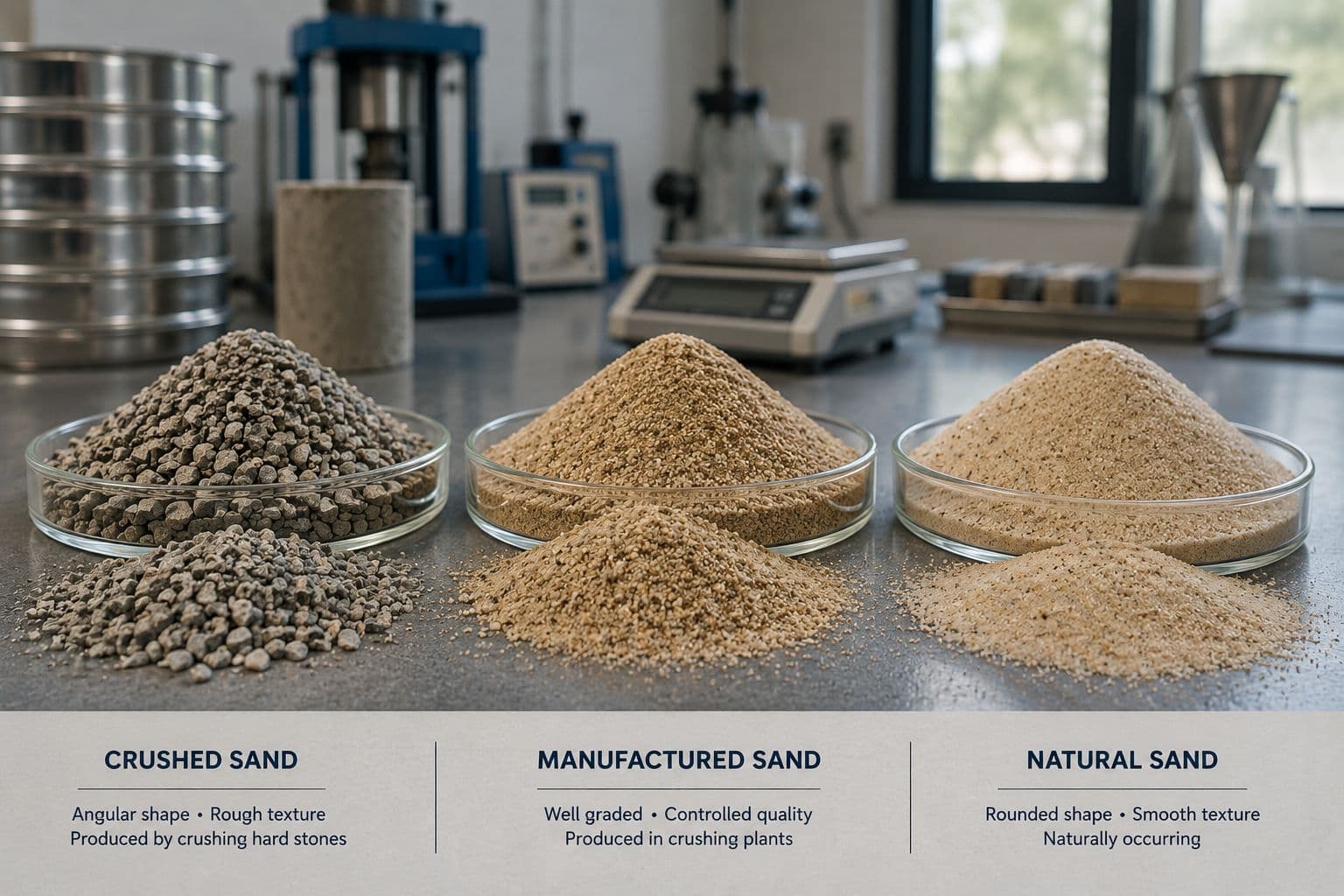
Crushed Sand / Natural Sand / Manufactured Sand
Selecting the right sand for construction projects requires more than visual inspection and supplier documentation. LERM-CIVIL provides specialized testing services for crushed sand, natural sand, and manufactured sand, helping project stakeholders verify material quality, define testing requirements, and support informed construction decisions.

Bipolar Test
Bipolar compounds used in infrastructure and industrial applications must meet strict quality and performance requirements before deployment. LERM-CIVIL provides comprehensive laboratory testing services to evaluate critical physical and chemical characteristics, helping clients verify compliance, maintain quality standards, and support safe application.