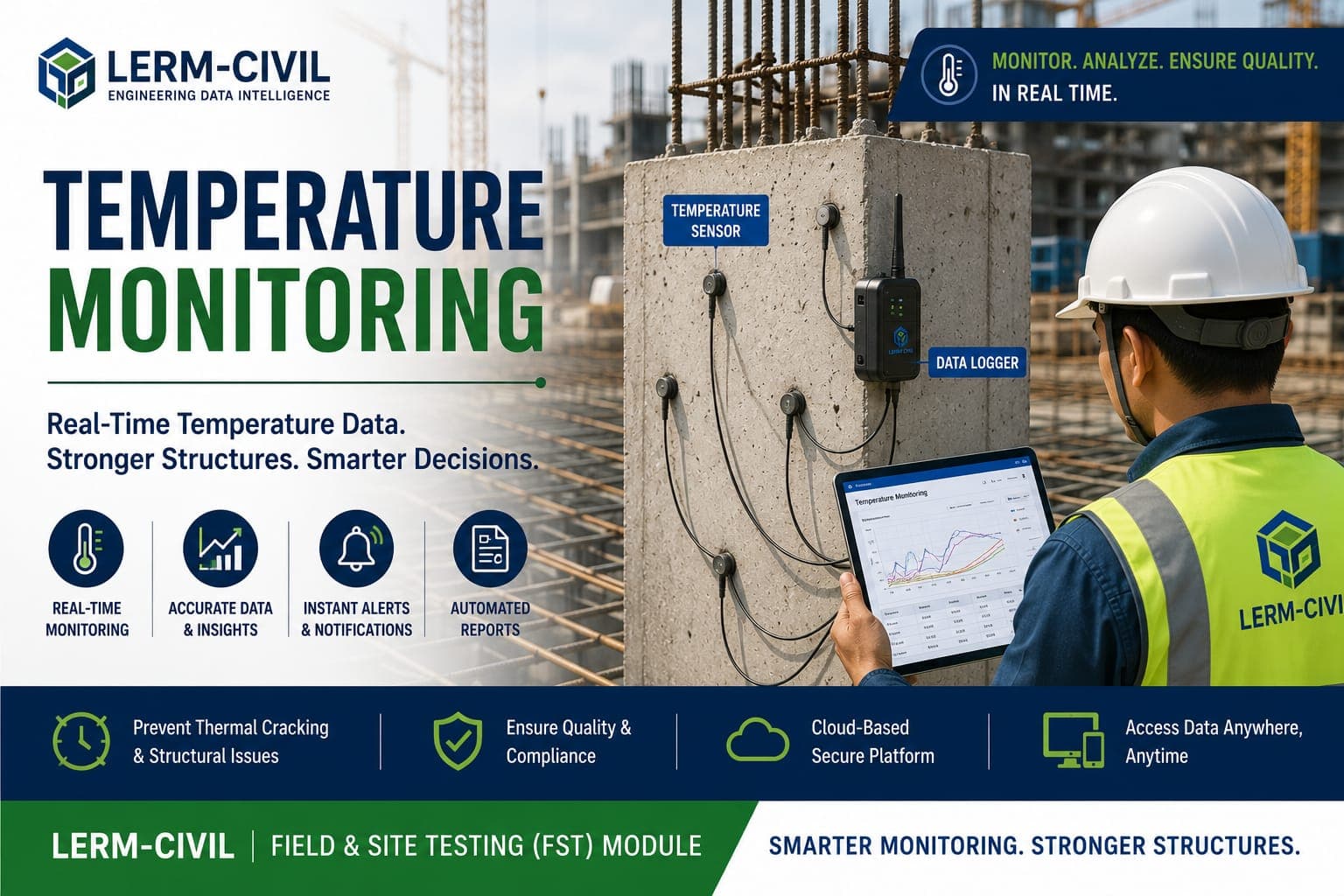
Temperature Monitoring
The LERM-CIVIL Field & Site Testing (FST) Module simplifies and automates the entire temperature monitoring process for construction and infrastructure projects. It enables real-time collection, analysis, and visualization of temperature data from multiple thermocouples, automatically calculating temperature differentials, generating trend graphs, and producing professional reports. By eliminating manual spreadsheets and calculations, the system improves data accuracy, reduces reporting time, and helps engineers monitor concrete curing, control thermal stresses, and prevent temperature-related cracking. The result is faster decision-making, enhanced quality control, and improved project performance through a single digital platform.
Temperature Monitoring: From Data Collection to Real-Time Insights with LERM-CIVIL FST
For construction professionals, quality engineers, infrastructure developers, and testing laboratories, temperature monitoring plays a critical role in ensuring the quality, durability, and long-term performance of concrete structures. Whether monitoring mass concrete pours, foundations, raft slabs, dams, bridges, or other critical infrastructure, accurate temperature data is essential to control thermal stresses, prevent cracking, and verify compliance with project specifications.
However, temperature monitoring is often managed through a combination of data loggers, manual readings, spreadsheets, and disconnected reporting tools. Engineers must collect temperature readings from multiple thermocouples, calculate temperature differentials, analyze trends, generate graphs, and compile reports manually. This process can be time-consuming, prone to errors, and may delay critical construction decisions.
Introducing LERM-CIVIL FST for Temperature Monitoring
The Field & Site Testing (FST) Module in LERM-CIVIL digitizes the entire temperature monitoring workflow—from sensor data collection to final reporting.
As temperature readings from thermocouples are captured and entered into the system, LERM-CIVIL automatically processes the data, tracks temperature variations, calculates temperature differentials, generates trend graphs, and prepares professional reports in real time.
No manual calculations.
No spreadsheet-based analysis.
No separate graphing software.
Just accurate temperature data transformed into actionable engineering insights.
How LERM-CIVIL FST Supports Temperature Monitoring
Engineers can capture and monitor:
Multiple thermocouple readings across different locations
Core and surface concrete temperatures
Ambient temperature conditions
Temperature differentials between monitoring points
Hourly, daily, and project-specific temperature trends
Time-stamped observations with complete traceability
Once data is entered, the system automatically:
Calculates temperature differentials
Generates temperature trend graphs
Tracks peak temperature development
Monitors cooling and stabilization patterns
Produces standardized temperature monitoring reports
Maintains complete audit trails of all observations
The Result?
. Real-time visibility of temperature behavior across the structure
. Automated calculation of temperature differentials
. Faster identification of potential thermal cracking risks
. Improved accuracy through digital data capture
. Standardized reporting across projects and teams
. Reduced report preparation time from hours to minutes
. Better decision-making during critical construction stages
.Complete traceability of monitoring records and analysis
Why Temperature Monitoring Matters
Temperature monitoring helps engineers:
Control thermal gradients in mass concrete
Prevent temperature-induced cracking
Verify compliance with project specifications
Assess concrete curing performance
Optimize construction sequencing and cooling measures
Improve long-term structural durability and performance
Whether you're monitoring foundations, raft slabs, bridge piers, retaining structures, dams, or other critical concrete elements, LERM-CIVIL FST provides a structured and efficient approach to managing the entire temperature monitoring process.
One Platform. One Workflow.
From temperature data collection to final engineering reports.
Ready to modernize your temperature monitoring process?
🚀 Take a free tour of the platform at LERM.in
Why Engineers Choose LERM-CIVIL FST
Real-time temperature tracking and visualization
Automated trend analysis and reporting
Centralized storage of monitoring data
Faster report preparation with complete traceability
Consistent documentation across projects
Improved collaboration between site and engineering teams
Greater confidence in quality control and construction performance
#TemperatureMonitoring #MassConcrete #ConcreteTemperature #ConstructionQuality #CivilEngineering #Infrastructure #GeotechnicalEngineering #FieldTesting #ConstructionTechnology #EngineeringSoftware #DigitalTransformation #LERMCIVIL #SaaS #LIMS #QualityControl #ConcreteCuring #ThermalMonitoring #ConstructionManagement
Related Posts
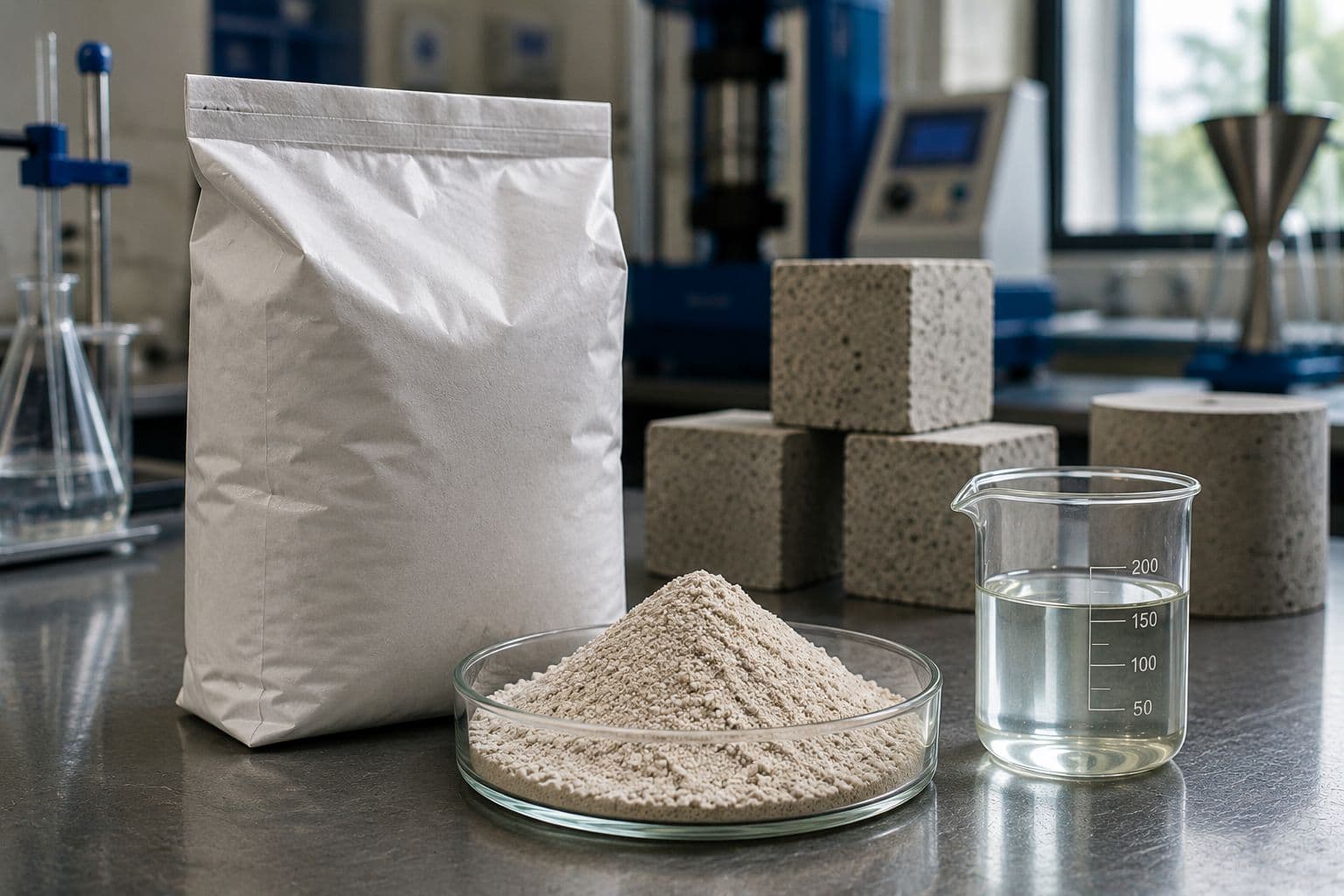
Cebex 100
Cebex 100 is widely used in construction applications where material performance, consistency, and compliance with project requirements are critical. LERM-CIVIL provides laboratory testing services to verify key quality parameters, helping consultants, contractors, and project stakeholders maintain confidence in material acceptance and project execution.
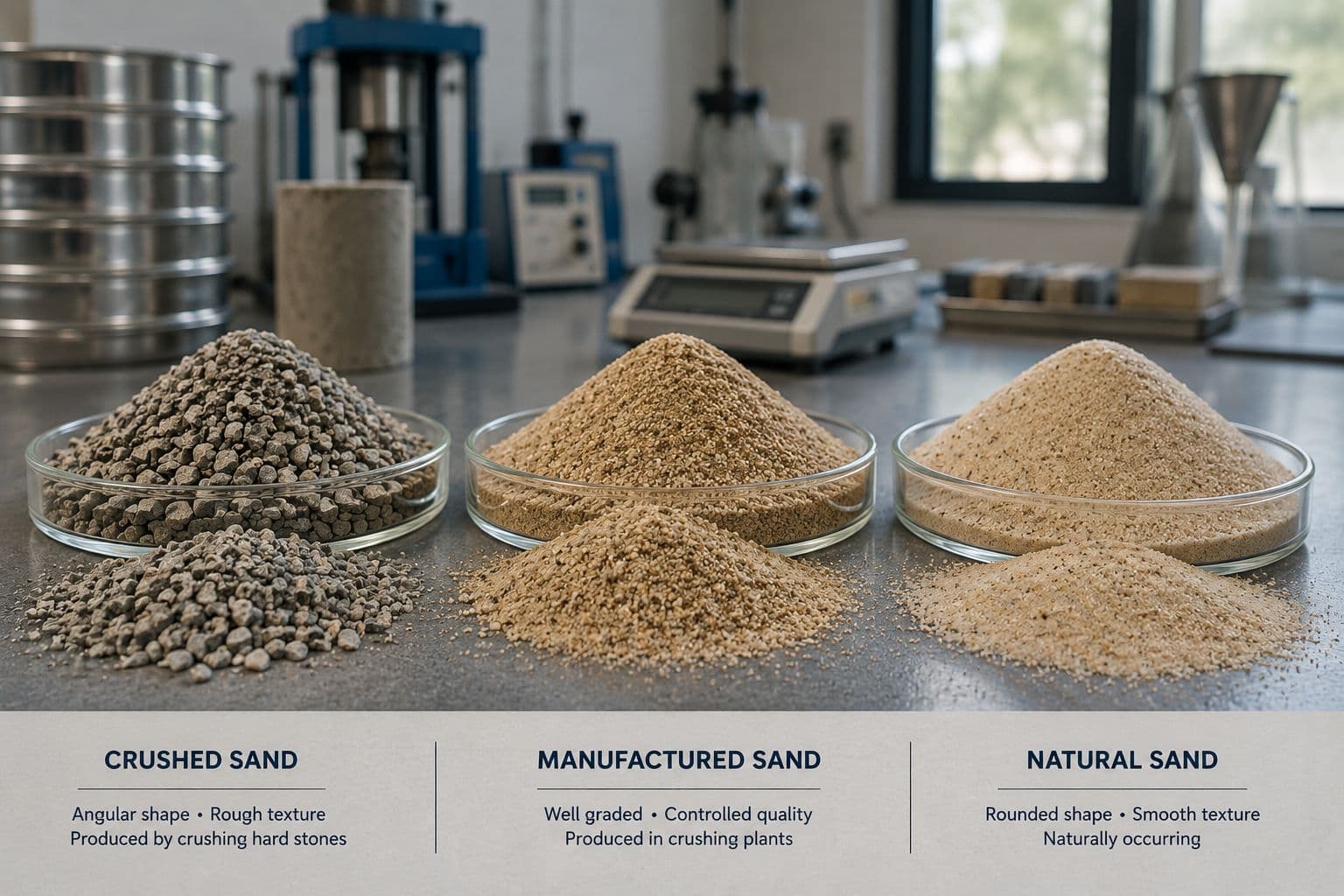
Crushed Sand / Natural Sand / Manufactured Sand
Selecting the right sand for construction projects requires more than visual inspection and supplier documentation. LERM-CIVIL provides specialized testing services for crushed sand, natural sand, and manufactured sand, helping project stakeholders verify material quality, define testing requirements, and support informed construction decisions.

Bipolar Test
Bipolar compounds used in infrastructure and industrial applications must meet strict quality and performance requirements before deployment. LERM-CIVIL provides comprehensive laboratory testing services to evaluate critical physical and chemical characteristics, helping clients verify compliance, maintain quality standards, and support safe application.